Can you transcribe Arabic WhatsApp voice notes?
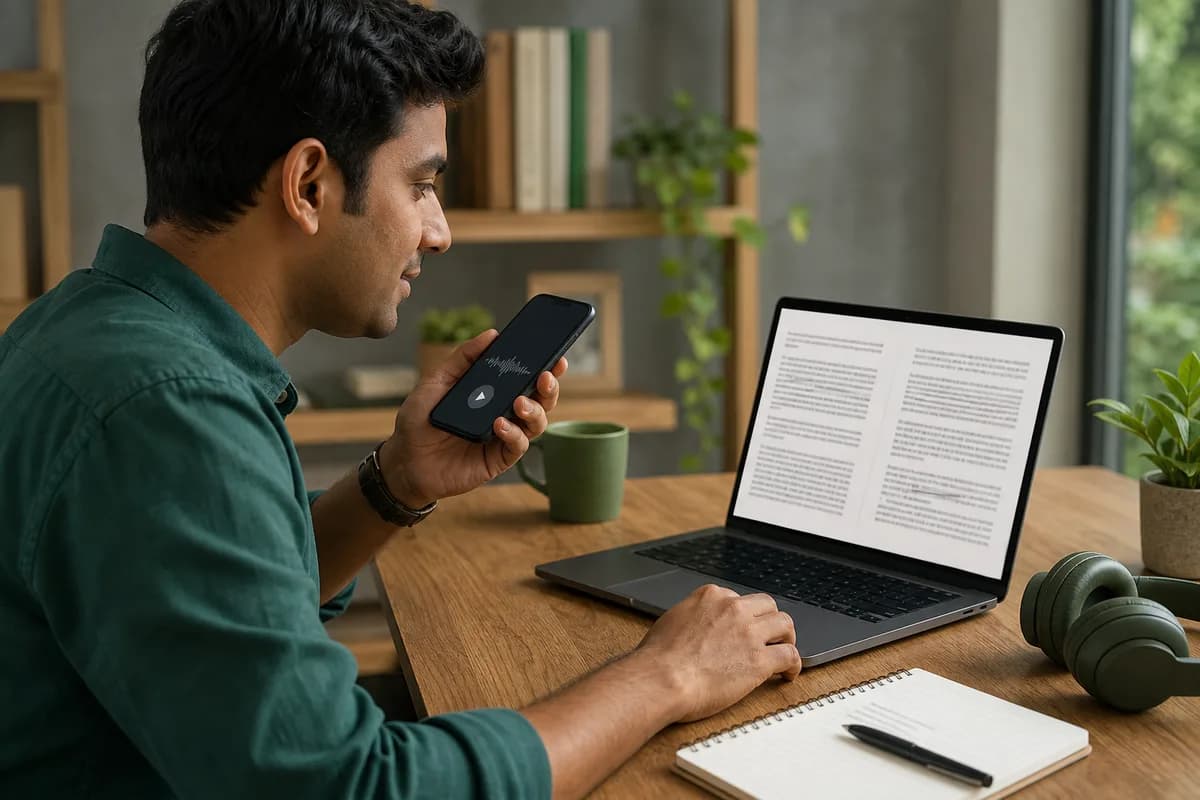
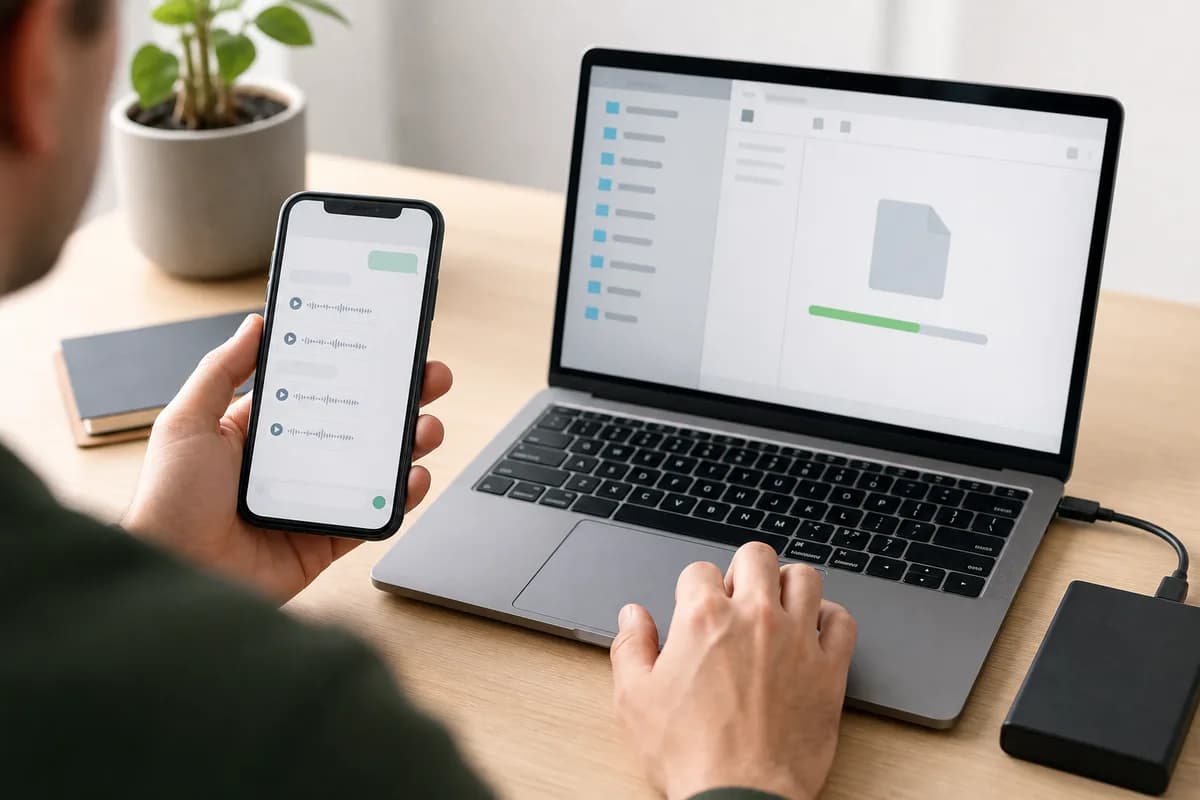
Yes—ChatToPDF supports Arabic WhatsApp voice-note transcription through a language-aware Deepgram Nova-3 and ElevenLabs Scribe v2 router. Export the chat with media, upload the ZIP, and the service can process the included recordings as one chronological job rather than one clip at a time. The current registry covers 93 languages, including 57 in provider-published high-or-better planning bands. Automatic text should still be checked against the audio wherever exact wording matters.
Best for many notes
Use the batch route when a chat contains dozens of recordings and conversation order matters.
Review remains essential
Replay names, numbers, noisy speech and any sentence you plan to quote or act on.
The ZIP needs media
A TXT-only export contains chronology but not the audio needed for speech recognition.
Language-specific guidance
What makes Arabic WhatsApp voice notes different?
Arabic is not one uniform spoken variety. A WhatsApp export may contain Modern Standard Arabic, Egyptian, Gulf, Levantine, Iraqi, Sudanese, Maghrebi or other dialects, sometimes in the same group. Vocabulary and pronunciation can differ substantially. The moderate published band is a reason to test the actual speakers carefully, not a reason to hide the language behind a generic “Arabic supported” badge.
Arabic chats often switch into English or French for brand names, work terms and education, and may include locally pronounced place names. Maghrebi conversations can be especially code-switched, while Gulf business chats may include names from several language backgrounds. These proper nouns and switches should be treated as high-risk fields.
Right-to-left Arabic text must coexist with left-to-right numbers, URLs, email addresses and file names. A responsive page and the downloaded document need to preserve reading order without reversing digits or detaching punctuation. Review the exported PDF and spreadsheet in modern software before sharing it as a finished record.
Short shared phrases may not reveal a precise dialect, and the writing system does not encode every spoken vowel. Automatic transcription can make a large collection searchable, but a qualified listener should confirm exact wording, dialect-sensitive meaning and names wherever a decision depends on them.
Dialect range
MSA plus regional spoken Arabic
Egyptian, Gulf, Levantine, Maghrebi and other varieties can differ greatly.
Code-switching
Arabic + English or French
Brands, institutions and professional terms often appear in another language.
Review priority
Dialect terms, names, numbers and RTL layout
Both speech recognition and document direction need deliberate checking.
Native-script check
مرحبًا · شكرًا · نلتقي غدًا
The output uses Unicode text. Names, links and genuine code-switched terms may legitimately use another script.

Whole-chat workflow
How to transcribe Arabic WhatsApp audio
The reliable route begins with WhatsApp’s own export, checks that the audio is actually present, and keeps each generated transcript tied to its place in the conversation.
- 1
Export the WhatsApp chat that contains the Arabic recordings
Open the individual or group chat in WhatsApp, choose Export Chat, and select Including Media. Save the ZIP exactly as WhatsApp creates it. A text-only export may show that a voice note existed, but it does not contain the audio bytes needed for Arabic speech recognition.
Before uploading, confirm the ZIP contains audio files such as OPUS, OGG, M4A or MP3. Keep an untouched copy of the original export.
- 2
Upload the original ZIP once
ChatToPDF reads the exported chat transcript as a map, finds the included audio and matches each file to the correct message row. This is different from a single-file transcription page: you do not have to save, rename and upload every Arabic voice note separately.
Upload only a conversation you are authorized to process. A group export can contain private messages and media from several people.
- 3
Inspect the free chat and voice-note count
The preview is a pre-payment quality gate. Confirm that the participants, message count and detected voice-note total look plausible. If the count is zero or much lower than expected, stop and recreate the export with media rather than paying for an incomplete archive.
The preview checks structure and included media; it cannot restore recordings that WhatsApp did not place in the export.
- 4
Process the Arabic notes in conversation order
The one-time Premium + Voice package costs $49 for one exported chat and up to eight total hours of included audio. A $99 Power User option covers one chat above eight hours. The generated text is attached to the message context available in the export, including sender and timestamp.
Pricing applies per converted chat, not per account and not as a subscription. A separate chat is a separate conversion.
- 5
Review names, numbers and consequential passages
Read the transcript, search for the passages you need, and replay the source audio wherever wording matters. Automatic Arabic transcription is a productivity tool, not a substitute for human verification in legal, medical, financial, disciplinary or publication-sensitive work.
Preserve the original ZIP and audio files. Add human corrections to a copy so the source record remains distinguishable from edited material.
Evidence before promises
How accurate is Arabic WhatsApp transcription?
Arabic is in ElevenLabs Scribe v2’s moderate published accuracy band (over 10% to 20% wer). That band is a vendor-published benchmark category, not a guaranteed error rate for every WhatsApp recording and not a ChatToPDF measurement of your file. Word error rate changes with microphone quality, speaking style, names, dialect, background noise and the amount of speech in the clip.
Arabic is in the moderate published Scribe v2 band, so pre-payment expectations should be conservative. Test recordings from each major speaker and dialect present in the chat. A good result on clear Modern Standard Arabic does not prove equal performance on fast dialectal speech recorded in a car or crowded room.
Human review is particularly important for Maghrebi vocabulary, Arabized foreign names, short unvowelled words and numbers embedded in right-to-left text. If dialect identification or exact legal wording matters, use a reviewer qualified in that variety and keep the audio available.
The practical quality check is therefore two-stage. First, verify that the correct language and the expected voice notes are present. Second, review a varied sample: one clean note, one fast note, one code-switched note, one noisy note and any passage containing names or numbers. If those samples are weak, do not assume the remainder is dependable merely because the document looks polished.
For ordinary search and reading, small punctuation or spelling errors may be tolerable. For quoting, filing, publishing or acting on a statement, listen to the audio and correct the working copy. ChatToPDF keeps the source filename and conversation position available so reviewers can move from generated text back to the recording rather than treating the transcript as an uncheckable black box.
- Audio factor
- Clear, close microphone
- Likely effect
- Usually produces the strongest baseline
- What to do
- Sample a few notes and still verify names, dates and amounts.
- Audio factor
- Code-switching
- Likely effect
- Borrowed terms may be spelled inconsistently
- What to do
- Review mixed-language passages using the guidance in the Arabic profile below.
- Audio factor
- Noise or overlapping speech
- Likely effect
- Words can be omitted or assigned incorrectly
- What to do
- Replay the recording and correct the working copy; do not infer missing words.
- Audio factor
- Names and local places
- Likely effect
- Rare proper nouns have less context than common words
- What to do
- Check against the chat text, contact names and the original audio.
- Audio factor
- Short or clipped notes
- Likely effect
- There may be too little speech for reliable detection
- What to do
- Inspect the source file and leave uncertainty visible rather than guessing.
Do not convert a benchmark band into a promise. It describes a vendor’s test category, not the word-error rate of your speakers, dialects or recordings. The source audio remains the authority for what was said.
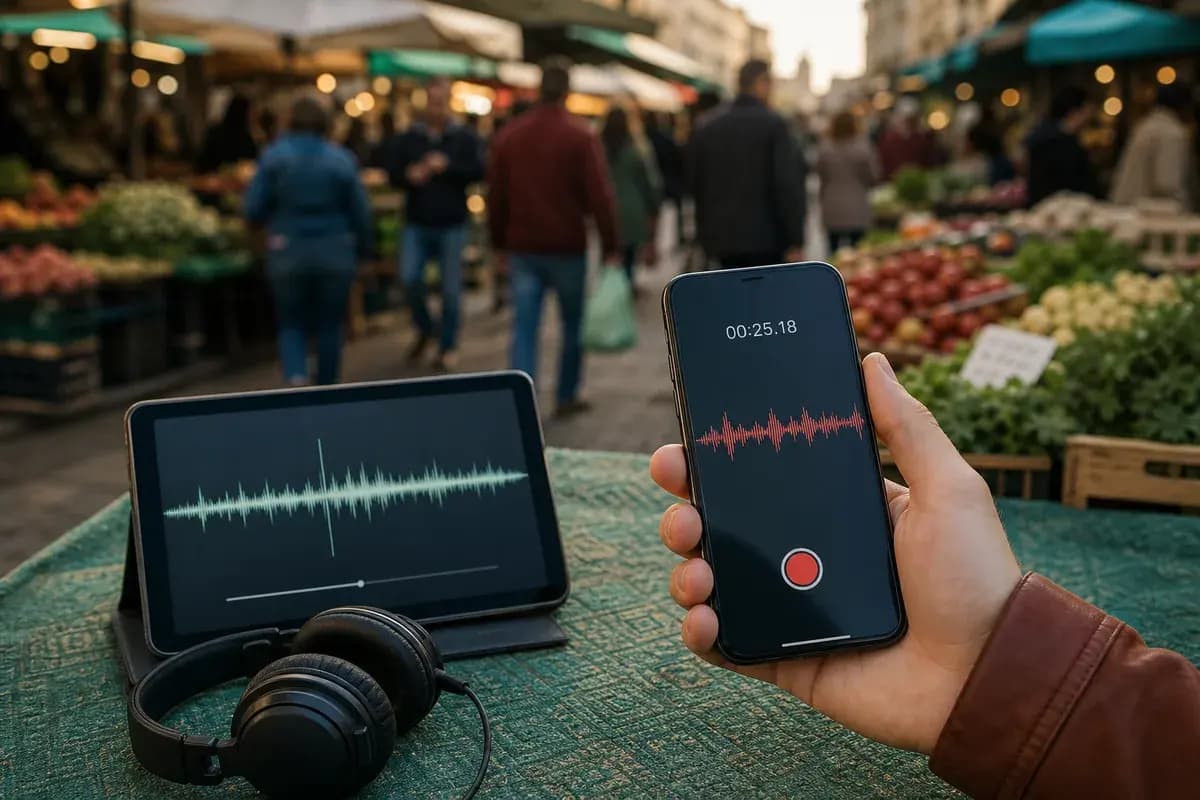
Context-preserving output
What the Arabic transcript keeps
A standalone text file can tell you what a clip appears to say. A whole-chat record also needs to show who sent it, when it appeared and which written messages explain it.
- Field
- Sender
- Retained
- Participant name or identifier from the exported message row
- Why it matters
- Shows who sent the recording in an individual or group conversation.
- Field
- Timestamp
- Retained
- The date and time written in the WhatsApp export
- Why it matters
- Keeps the voice note in sequence with nearby written messages and media.
- Field
- Source audio
- Retained
- The filename matched from the export ZIP
- Why it matters
- Lets a reviewer compare important text with the original recording.
- Field
- Arabic transcript
- Retained
- Recognized speech in the language used in the recording
- Why it matters
- Makes the spoken content readable, searchable and available in the output bundle.
- Field
- Message context
- Retained
- Text and media rows around the voice-note message
- Why it matters
- Reduces ambiguity about what the speaker was answering or discussing.
- Field
- Review state
- Retained
- A visible failure or low-confidence state when usable text is not produced
- Why it matters
- Makes uncertainty easier to find instead of silently presenting an empty result as complete.
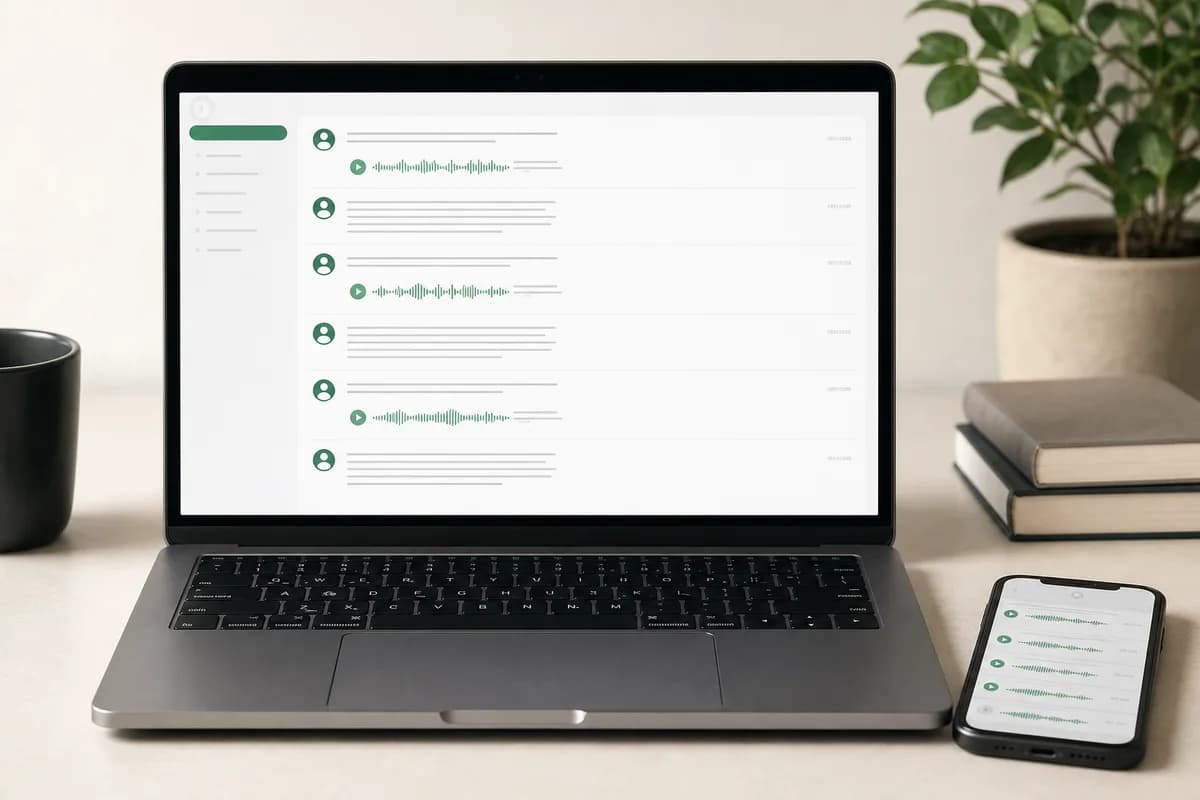
Best for reading the chronological conversation and sharing a fixed-layout working copy.
XLSX
Best for filtering by sender, date, message type or transcript-related fields in a workbook.
CSV
Best for portable row-based analysis in other tools, with Unicode-aware import settings.
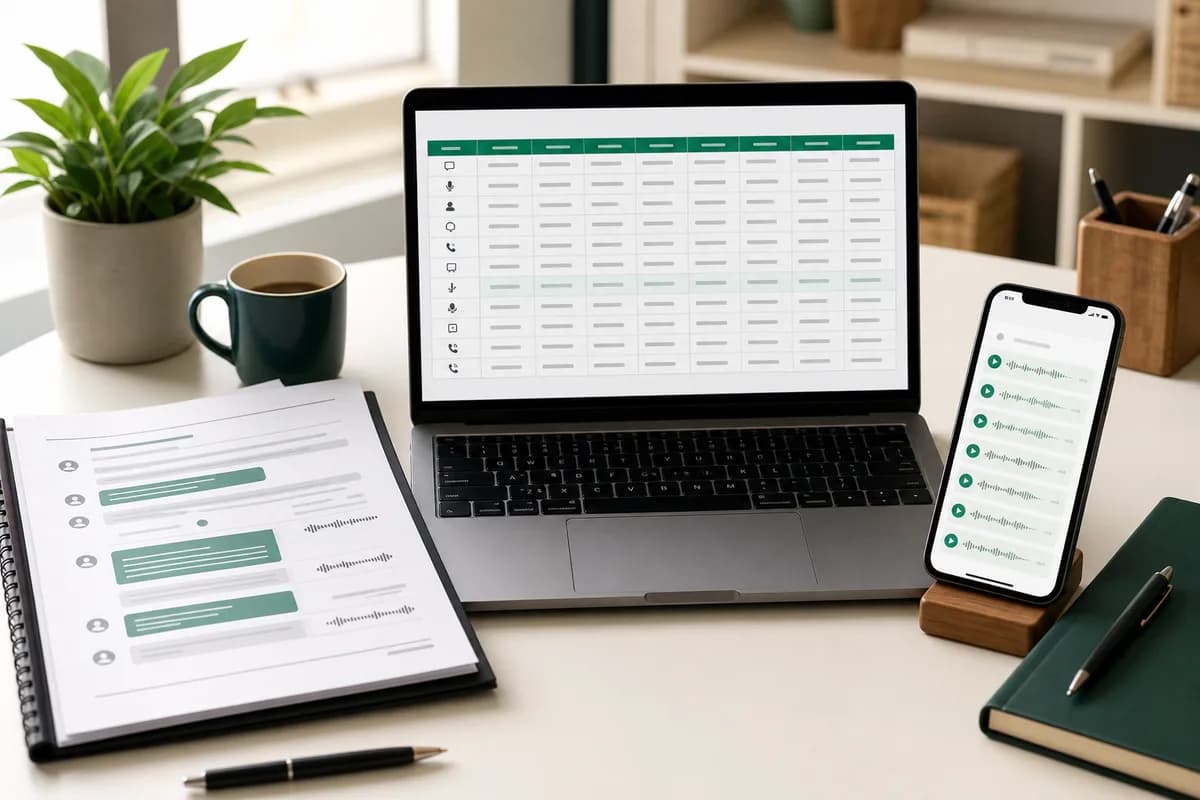
Practical use cases
Where a Arabic chat transcript helps
Cross-border family chats
Search Arabic voice notes from relatives in different countries while retaining dates and surrounding messages.
Client and supplier records
Review instructions, quantities and approvals shared in Arabic, English or mixed business speech.
Immigration preparation
Organize authorized voice-note chronologies and verify material passages before including them in a case file.
Journalism and field research
Locate Arabic interview segments quickly, then use a dialect-aware listener for exact quotations.
Community and NGO work
Bring multilingual updates from dispersed teams into a sender- and timestamp-aware working document.
Personal archives
Preserve voice-heavy histories in a readable right-to-left transcript without processing each clip manually.
Human quality control
A Arabic transcript review checklist
Review the details most likely to change the meaning of a message. The objective is not to make uncertain audio look fluent; it is to distinguish supported wording from material that still needs a listener.
Identify relevant dialects
Sample every major speaker and use reviewers familiar with Egyptian, Gulf, Levantine, Maghrebi or other varieties present.
Check foreign and Arabized names
Use written records for people, companies and places; several spellings may sound plausible.
Verify right-to-left layout
Inspect dates, amounts, URLs and mixed-script lines in the PDF and spreadsheet for reading-order errors.
Replay every number
Confirm times, prices, phone numbers and quantities independently from the surrounding sentence.
Mark dialect uncertainty
Do not rewrite unfamiliar regional vocabulary into Modern Standard Arabic without human confirmation.
Separate quoted and background speech
Attribute only what can be heard clearly from the intended speaker; keep overlapping audio marked.
Privacy and source integrity
Treat the export like the private conversation it contains
A media-inclusive WhatsApp export can contain personal messages, recordings, contact names and files from people who did not create the export. Limit the job to material you are permitted to process, restrict access to the result and avoid uploading a broader group chat when only a narrower conversation is relevant.
ChatToPDF sends supported audio to configured speech-recognition providers over authenticated connections and disables provider logging on the ElevenLabs path. Source exports, extracted media and generated downloads are automatically removed within seven days. That lifecycle reduces exposure; it does not make a cloud upload equivalent to on-device transcription.
Keep an untouched source export separately when authenticity, evidence or future verification matters. A generated transcript is a derived working document. Record human corrections transparently and never discard the audio merely because the text is easier to search.
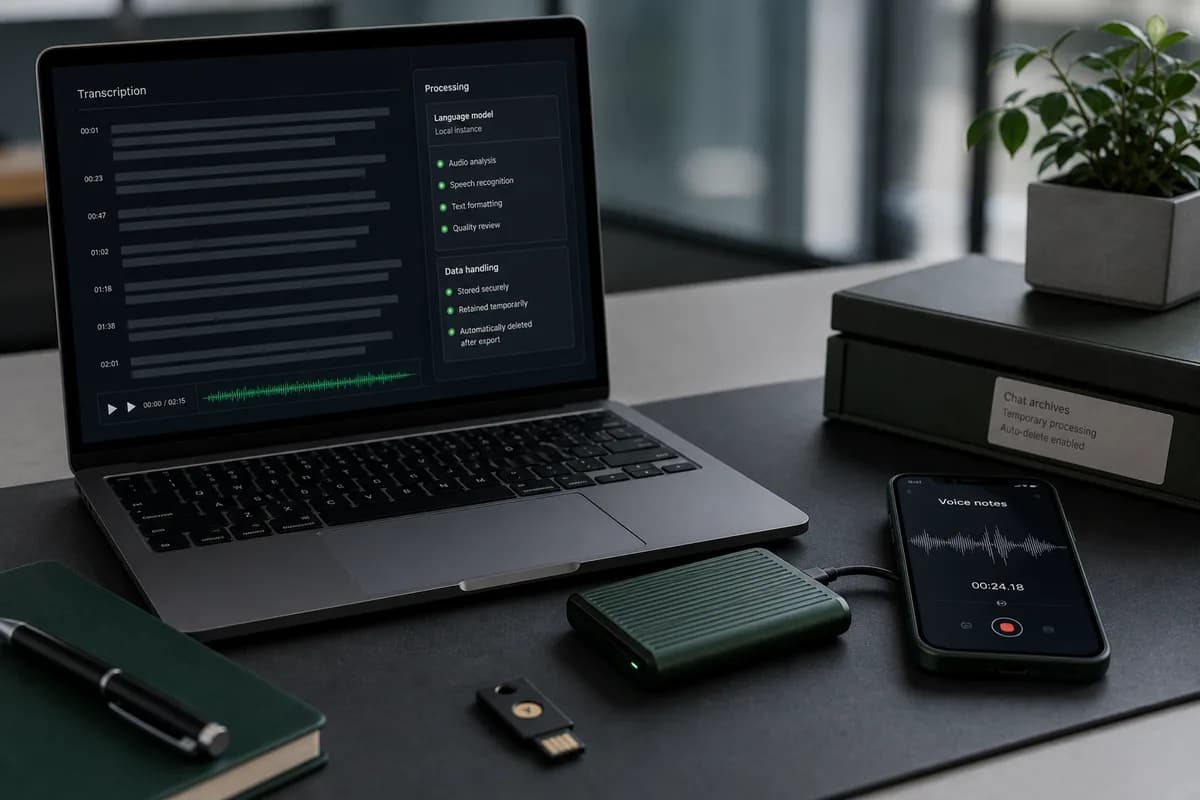
Troubleshooting
Common Arabic transcription problems
The dialect output looks like Modern Standard Arabic
Use a dialect-aware reviewer and retain the actual spoken wording where the audio supports it.
Arabic and Latin text appears in the wrong order
Open the output in a modern bidirectional-text viewer and inspect numbers, URLs and mixed-script rows.
English or French names are mangled
Compare company names, links and written messages, then verify any correction against the source recording.
The wrong Arabic variety is assumed
Do not infer dialect from one short note. Sample longer speech from the actual participant and use contextual knowledge.
No audio is present in the export
Download the voice notes in WhatsApp, choose Including Media and upload the new ZIP.
Noise hides dialectal words
Use headphones, replay the source and mark the segment inaudible if the sound cannot support a defensible reading.
Frequently asked questions
Arabic WhatsApp transcription FAQ
Which Arabic dialects can be transcribed?
The system supports Arabic speech, but results vary across Modern Standard Arabic and regional varieties. Test the actual speakers and use a dialect-aware reviewer for consequential material.
Will Arabic render right to left?
Arabic text is displayed right to left, while numbers, links and Latin-character names remain bidirectional content. Inspect mixed-script lines in the downloaded files before sharing them.
Can it handle Arabic mixed with English or French?
Code-switched recordings can be processed, but foreign names, institutions, brands and short switches need careful review against the recording and written context.
Is automatic Arabic text accurate enough for legal use?
Arabic is in a moderate published accuracy band, and dialects add variation. Use the result for search and first-pass review, then have important passages checked by a qualified listener and preserve the source audio.
Can ChatToPDF transcribe every Arabic voice note in one WhatsApp chat?
Yes, when the audio files are present in a media-inclusive WhatsApp export. Upload the original ZIP and ChatToPDF can process the supported voice notes as one job, then return their Arabic text in the chronology of that chat. Missing or undownloaded audio cannot be reconstructed from a placeholder in the TXT file.
How much does an Arabic WhatsApp voice-note transcription cost?
The free preview checks the chat and counts included voice notes. Premium + Voice is a one-time $49 conversion for one chat with up to eight audio hours. Power User is $99 for one chat above eight hours. Converting another chat is a separate purchase.
Does the output keep the original Arabic audio?
The transcript is matched to the source audio filename and its message row so important passages can be verified. Keep your untouched WhatsApp export as the primary source copy; generated PDF and spreadsheet files are working outputs and should not replace the original archive.
Can I rely on an automatic Arabic transcript for court or an official decision?
Use it to speed up search, chronology and review, then verify consequential passages against the recording. Rules for evidence, disclosure, consent and certified transcription depend on the jurisdiction and matter. Preserve the original export and obtain qualified advice where the stakes are high.
Primary references and claim boundaries
Language coverage and benchmark bands come from the speech provider’s current documentation. Workflow and product statements reflect the ChatToPDF implementation. No automatic transcript is represented as a certified or error-free record.
- WhatsApp Help Center — export your chat history
Primary instructions for creating the TXT or media-inclusive ZIP that supplies the chat chronology and voice-note files.
- ElevenLabs documentation — speech to text
Primary model documentation for supported audio, language coverage and speech-recognition capabilities.
- ElevenLabs documentation — supported languages
Primary reference for the published Scribe v2 language and word-error-rate bands summarized on this page.
Last reviewed: 24 July 2026. ChatToPDF is independent and is not affiliated with or endorsed by WhatsApp, Meta, Deepgram or ElevenLabs.